

Rice Pudding
A boring yet perfect recipe and a reflection into insecurity, simplicity, and flexibility.

I had grand plans to share bread recipe, but then I got hit by a bout of laryngitis and wasn’t in the kitchen at all, except for brewing my ginger-lemon-honey-cayenne potion. I managed make a pot of rice in the rice cooker for dinner, which left me with some uneaten rice languishing in the refrigerator.
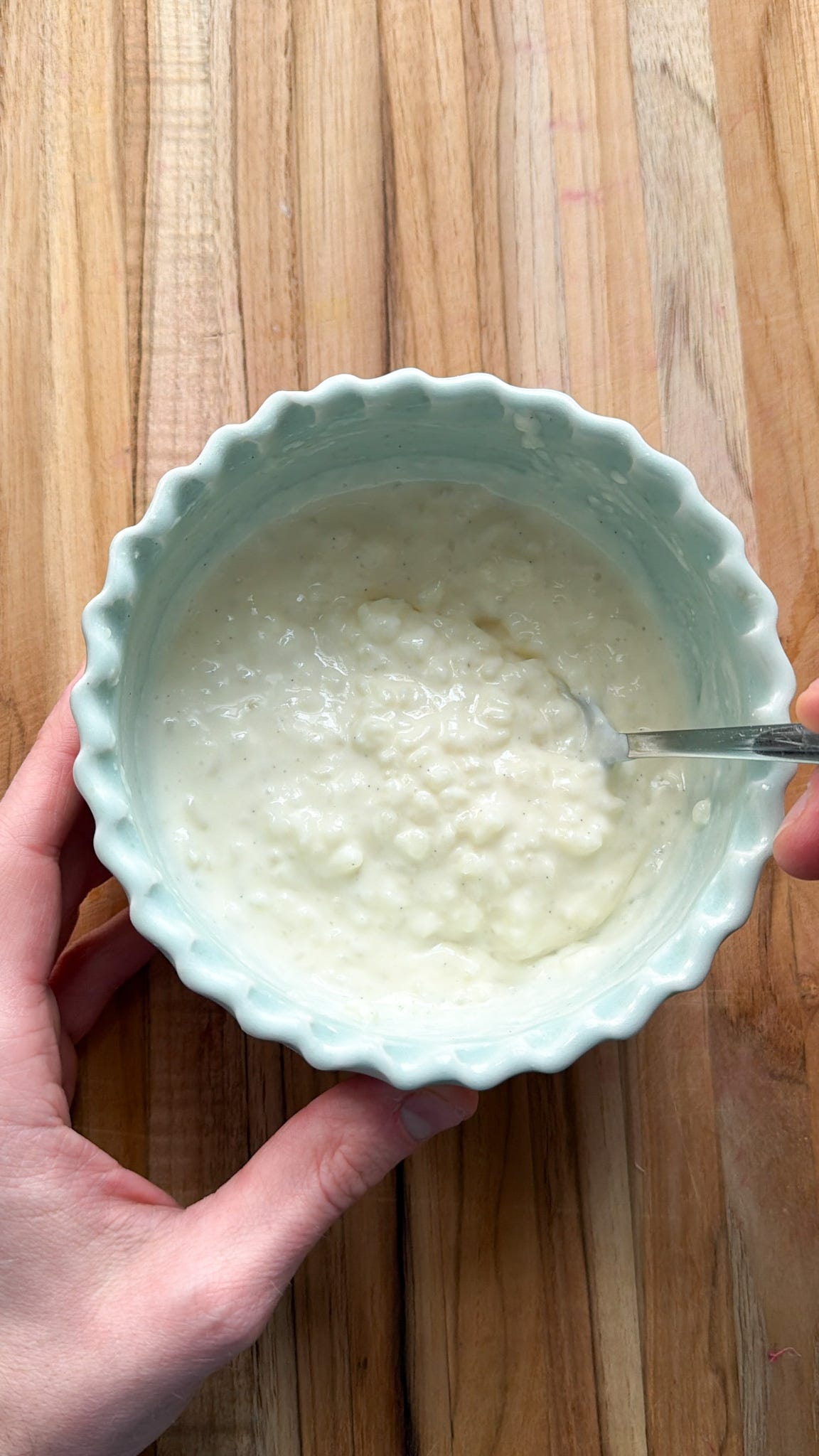
I wanted dessert but had little gumption to bake. Pouring milk and leftover rice into a saucepan and letting it simmer sounded manageable and comforting. I made this rice pudding to eat, not to write up a recipe for. Then I realized I didn’t have a recipe for rice pudding on hand. So, I wrote one up. For me. With no intention to share.
Given all of the recipes out in the world, who needs another recipe for rice pudding? It’s the simplest of simple and the plainest of plain: starch and milk. It seemed too basic to spend the time writing up a recipe, editing it, testing it, photograph it (however novice), and sharing it. I’m sure most of you have a recipe for it. Heck, I didn’t even add tahini or matcha or caramelized white chocolate.
Then I spiraled into the land of, insecurity. Is this recipe too simple? Why in the world would anyone read about rice pudding? Should I do a twist on rice pudding? Add a trendy ingredient to it? Use some hard-to-find rice variety? Sigh. No, I want vanilla rice pudding with a touch of orange peel. I don’t feel like succumbing to the need to stand out when I know what I want: rice and milk. So here we are. A simple, flexible, trusty recipe.
Whether kheer, arroz con leche, Milchreis or any of their brethren, a sweetened, sometimes-spiced rice and milk porridge pops up across cultures. In my opinion, you don’t need anything besides rice and milk, plus a bit of sugar to sweeten and something to flavor it. Eggs or yolks are completely unnecessary. As long as you use whole milk, the rice starch and milk fat results in a luxurious texture.
Sidebar: If rice cooked in milk and lightly sweetened is pudding then it follows that oatmeal is also pudding.
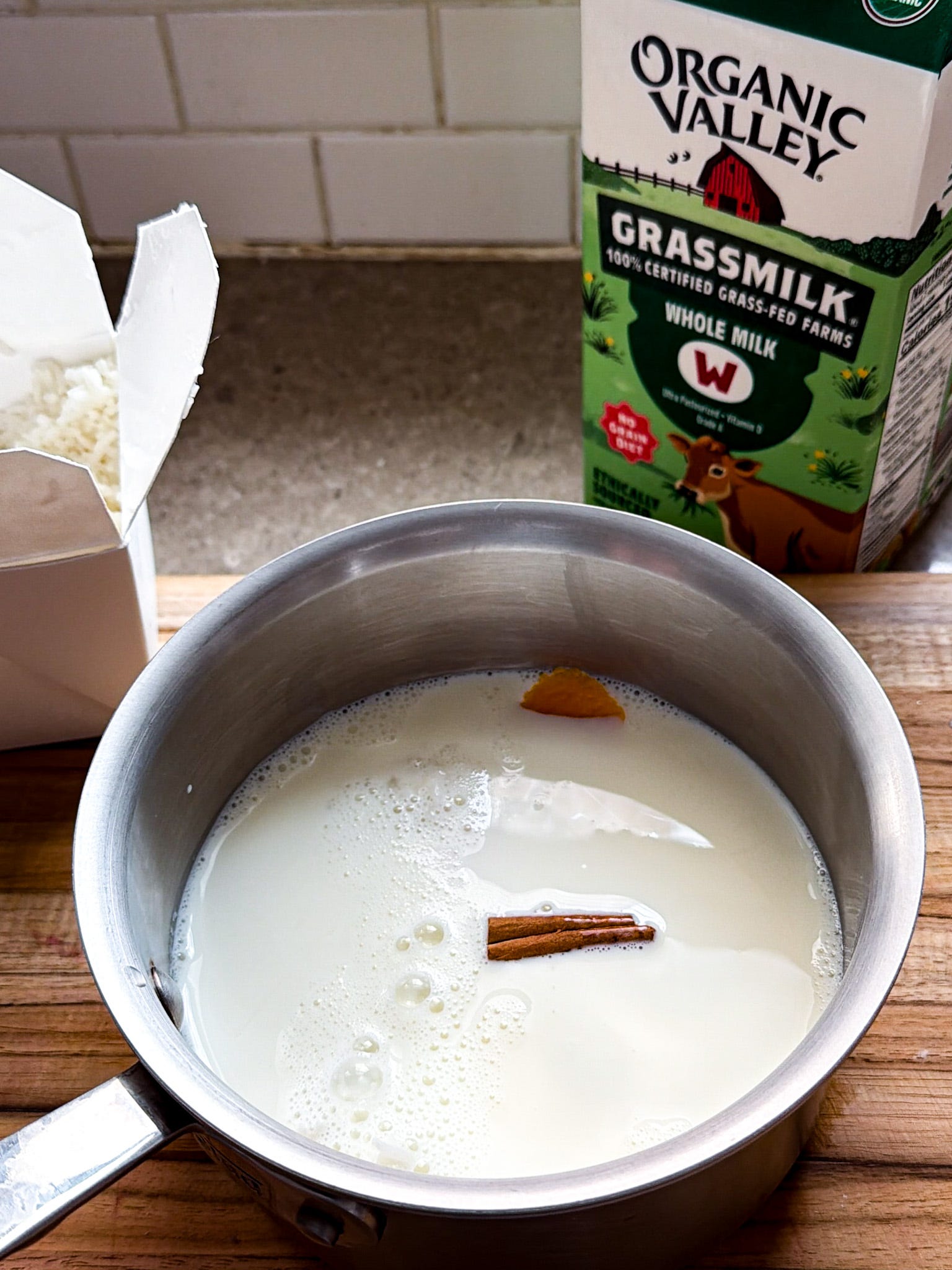
I like to use the good milk, preferably Organic Valley’s Whole Grassmilk. The richer flavor of this pastured elixir shines in this dairy-forward dessert.
You can use leftover cooked rice or raw rice. Reach for any type of white rice you have, short grain to long grain.
Which I make depends on whether I have leftover cooked rice or not and whatever type of rice is closest at hand. Pudding made with leftover rice tends to be a bit softer and taste more rice-forward, whereas when you start with raw rice the final pudding has more texture and tastes dairy-forward. I’ll take either.
Recipe Notes:
I have tested this with short, medium, and long grain rice as well as with cooked and raw rice
If the chilled pudding is too thick, stir in some milk or cream until it’s your ideal texture.
If the chilled pudding is too thin, simply return it to the stove and simmer until thickened.
Brown rice won’t work—it doesn’t get creamy and retains too much toothsomeness.
If you want a golden, custardy color, add a pinch of ground turmeric at the start of cooking.
Variations: You can use alternative spices. A 1-inch piece of cinnamon stick or 2-3 crushed cardamom pods. Or a bit of ground cinnamon or cardamom. Another favorite: keep the vanilla but omit the citrus zest and finish the pudding with a grating of fresh nutmeg.
Rice pudding is a fun way to play with flavor.
Rice Pudding
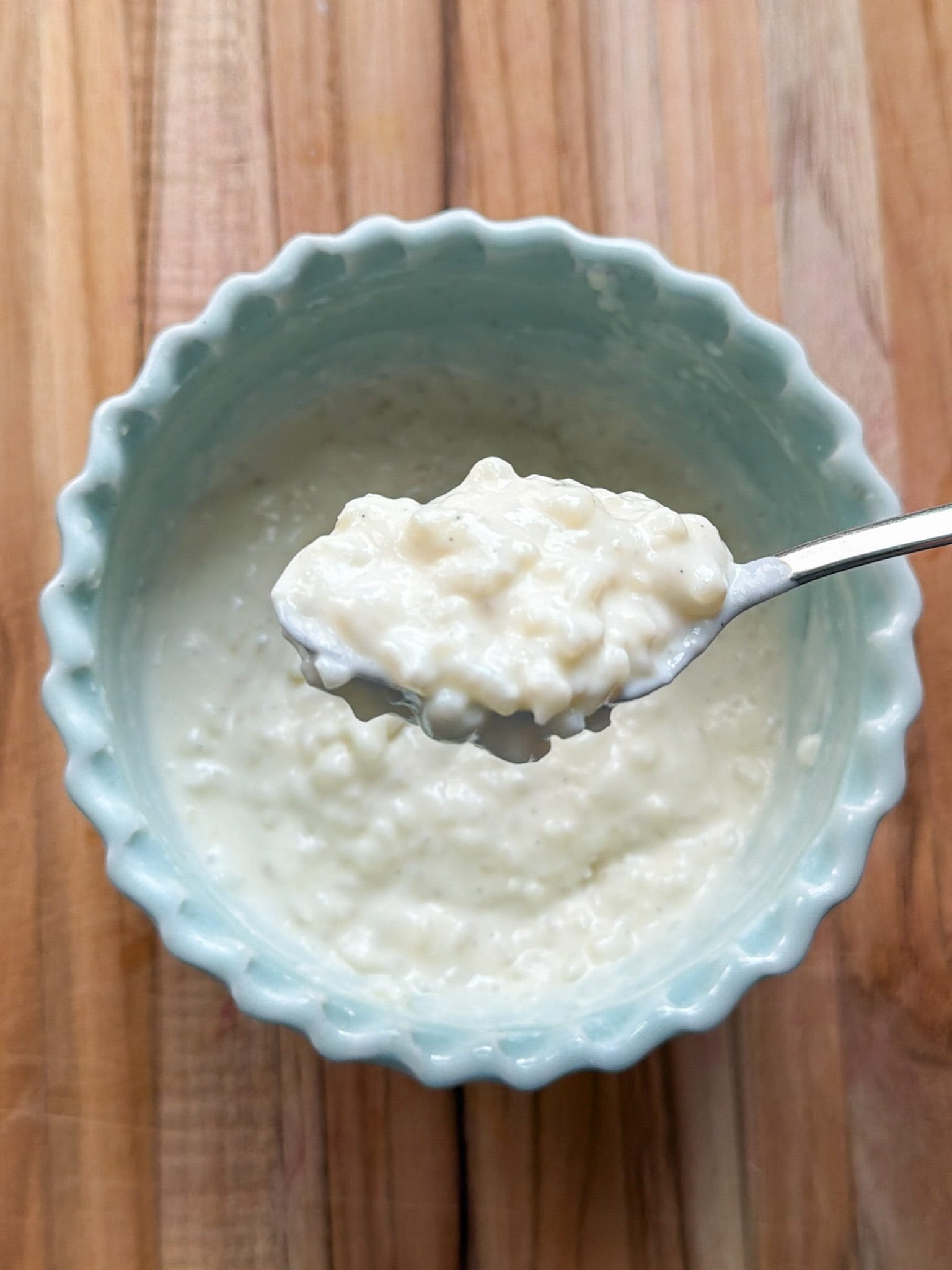
Comfort in a bowl.
I like my rice pudding gilded with vanilla and lifted with some orange or lemon zest. (Jason prefers cinnamon.)
Makes about 2 servings, easily doubled.
460 g (about 2 cups) Organic Valley whole milk
120 g cooked white rice or 60 g raw white rice, rinsed
2-3 Tablespoons sugar
Pinch of fine sea salt
1 2-inch strip of orange zest or lemon zest
1/2 teaspoon vanilla paste or 1/3 of a vanilla bean, split
Combine everything in a small saucepan and stir. (I usually start with 2 Tablespoons of sugar, then taste at the end and adjust.) Bring to a boil, then lower to a bare simmer (medium-low on my stove).
Cook with a lid ajar, stirring occasionally until thickened to your liking, about 40-50 minutes.
Remember, the pudding will thicken as it cools. I halt cooking when it looks like thin yogurt. If you want to eat it fridge-cold then cook it less. If you want to eat it piping hot, then cook it a bit more. How quickly it cooks and thickens depends on the type of rice and the exact temperature of the stove. Use your eyes more than the timer. If using raw rice, test a bit of the pudding to ensure that the rice is tender.
Cool. Remove the orange zest. Let it cool to your desired temperature.
Serve warm, room temperature, or chilled. Serve plain or with fruit, jam, and/or chopped nuts. If the pudding is too thick, stir in some milk or, better yet, heavy cream.
A note on partnerships: I don’t even break even writing this newsletter. I don’t use Amazon affiliate links because I don’t want to send any more cash their way. But I will partner with brands and products that I believe in. Enter Organic Valley. They are a farmer-owned cooperative of more than 1,600 organic farms and headquartered in La Farge, Wisconsin. I’m a proud Organic Valley partner. In fact, I would use their milk, butter, cheese, cream, and more regardless of if I was a partner or not. I’ve used their products for decades.
Happy Baking,
Martin
Thanks for this. I have over complicated rice pudding for years, I think. I have a broken tooth at the moment and waiting for a fix. This is my easy to eat comfort food i will make today.
This is great. Two things:
1. I came to kheer relatively late in life and have become somewhat obsessed with it. Definitely my preferred version.
2. Re oatmeal and pudding--if I had the time and energy for it (and maybe if I were a different kind of person all together), I would campaign to have Americans start calling the cooked dish "porridge," to differentiate it from the raw ingredient "oatmeal."