

Mischbrot
A recipe for a half rye, half wheat bread, a fitting prologue to my German bread series.

It’s time. It’s time to begin your journey making bread with rye flour. I hope you fall in love with it like I have. This newsletter also serves prologue to my series about Brot, breads from Germany and other parts of German-speaking Europe (which includes Austria, Switzerland, and Italy’s Südtirol-Alto Adige).
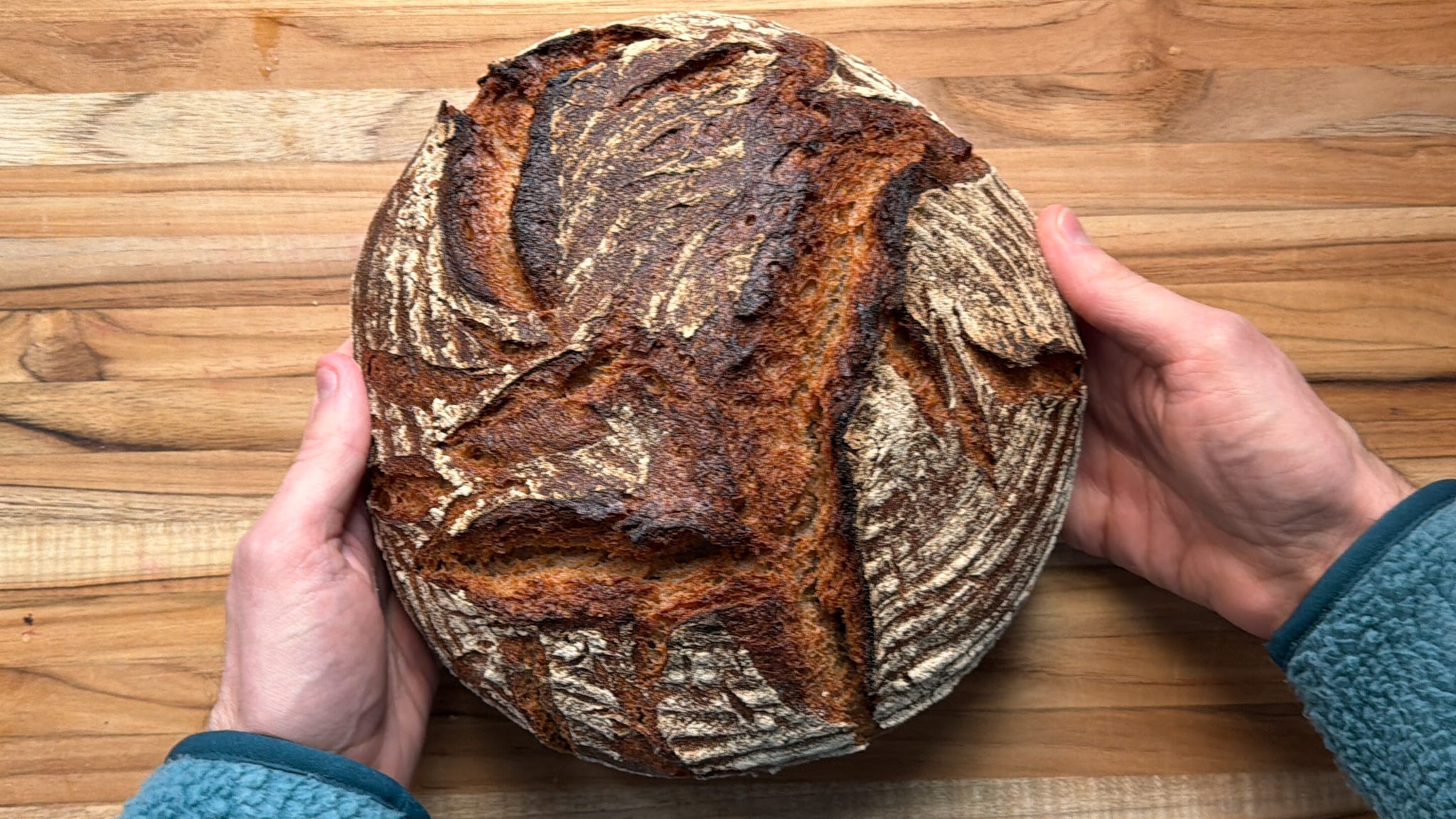
Listen, I love all bread. But there’s something about the scent of rye bread that enchants. Forgive the corny indulgence, but whenever I pull a loaf of rye bread from my home oven, I take a moment, close my eyes, and imagine myself walking into a German bakery, that carbohydrate Candyland. Well-fermented and darkly-baked rye bread evokes cinnamon, sumac, chocolate, orange, and a basket of undefinable aromas bring both deep base notes and bright high tones. And we didn’t even add any spices to the bread.
Side note: Rye is not caraway. The soft American-style deli rye breads I grew up on were always spiked with caraway seeds. I thought that the musky aroma of caraway seeds, which look like (and are related to) fennel and cumin, was the flavor of rye. It’s not. So, if you think you don’t like rye bread, you may just hate caraway.
American flour defaults to wheat. Flour means wheat flour. All-purpose flour assumes wheat. Bread flour and cake flour assume wheat. That’s not the case everywhere. In German-speaking countries, flour (Mehl) is almost always specified by the grain. In German grocery stores you find Weizenmehl (wheat flour) and Roggenmehl (rye flour) each occupying significant space on the shelves alongside a decent amount of Dinkelmehl (spelt flour), and an array of other ancient grains and gluten-free options.
This all makes sense, because Germany is one of the few countries that almost equally spans the ideal climates for rye (in the north and east), wheat (in the south), and even spelt (in south-central area, too). Northern and eastern German breads tended to be rye-dominant, while southern bread focused on the local wheat. Most of America, on the other hand, has soils and climate suited for wheat production, thus wheat dominates our flour.
In my kitchen, however, I go through rye flour almost as much as I do all-purpose.
As with most things, Germans have strict laws around bread, especially when it comes to naming bread. Customers know exactly what they get when they buy a loaf of bread. In America you can label something “rye bread” even if it barely contains any rye flour. Most deli-style rye breads contain very little rye flour, often less than 20%. In Germany, that would be illegal. American style soft rye loaves would most likely be called “Wheat Mixed Bread” in Germany.
Here is a simplified summary of how bread in Germany is labeled*, from wheat bread to rye bread:
90%+ wheat flour = wheat bread = Weizenbrot
51%-89% wheat flour = wheat mixed bread = Weizenmischbrot
50% wheat (or spelt) & 50% rye =mixed bread = Mischbrot
51%-89% rye flour = rye mixed bread = Roggenmischbrot
90%+ rye flour = rye bread = Roggenbrot
Today we have a 50/50 Mischbrot. It’s half dark rye flour, have plain-old wheat bread flour.
Recipe Notes:
You need a sourdough starter—Anstellgut, in German—to make this bread. The sourdough starter ferments the rye flour, helping to acidify the dough, which is critical (more on this in another newsletter). More importantly, the long-fermented sourdough (Sauerteig) adds incredible flavor and complexity to the bread. (Plus some health benefits.)
Don’t have a sourdough starter? Ask around—anyone who bakes sourdough will be happy to give you some of theirs. I do not suggest creating your own from scratch.
It doesn’t matter if you use a wheat- or rye-based sourdough starter.
I add yeast to the dough to create a reliable fermentation, but if your sourdough starter is strong, you can leave the yeast out. It will take much more time and the final bread will probably taste much sourer.
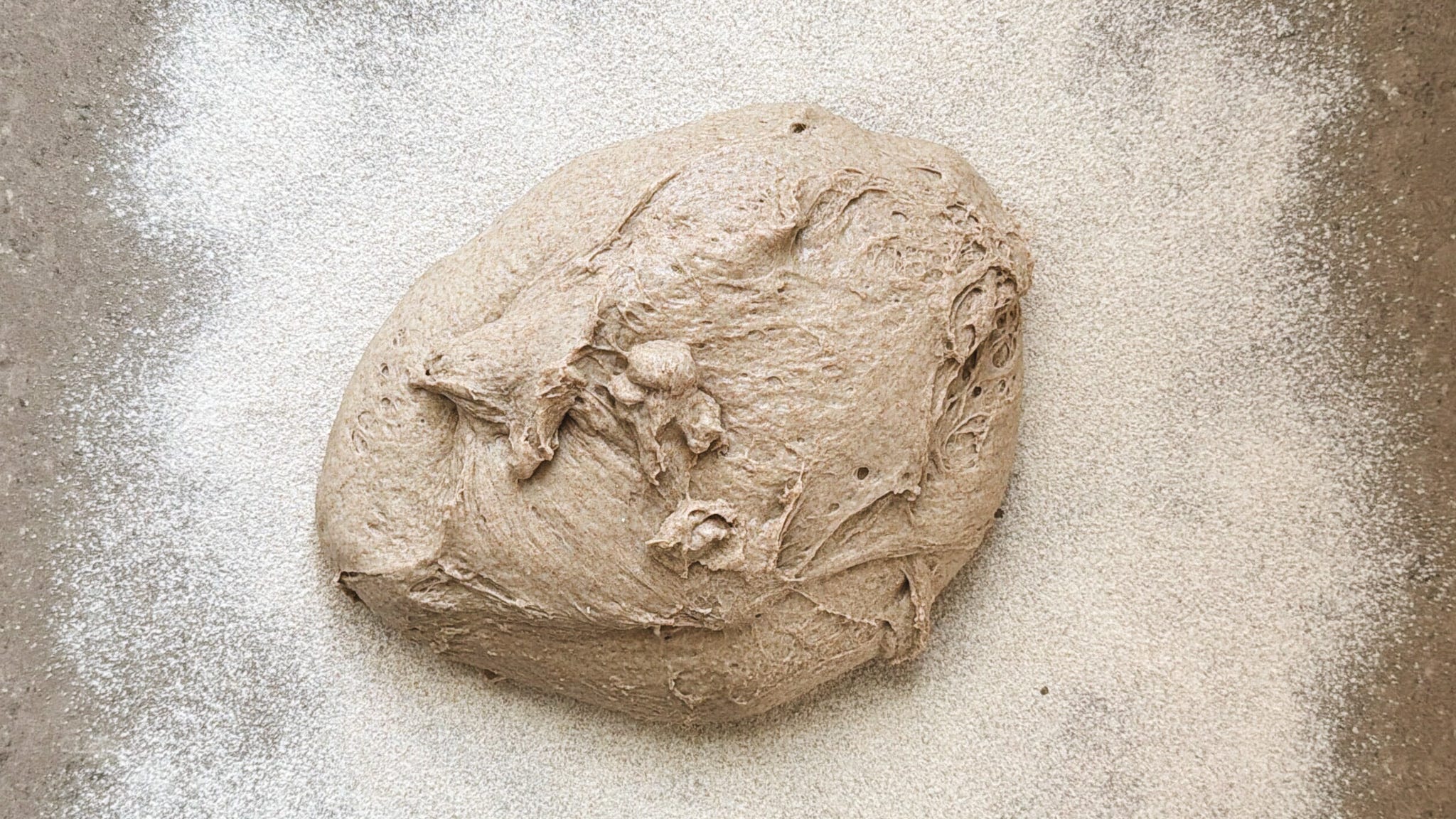
You will think that there is too much water in this dough, but it’s fine. It will be sticky. It will stick to your hands and everything else. Do not add extra flour if you can help it, because a wetter dough gives a better final result.
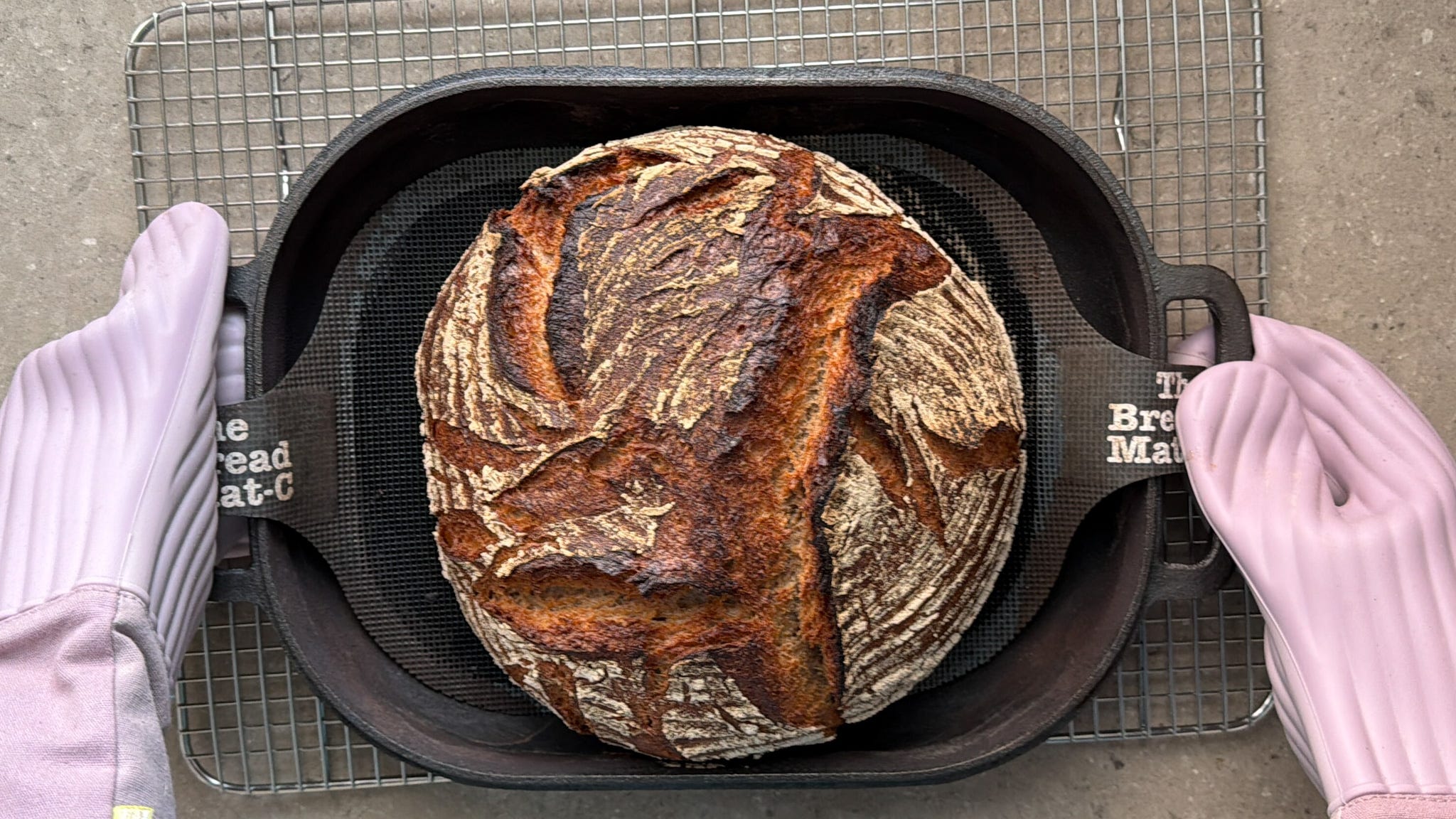
Bake this loaf dark. Color equals flavor. You want a crispy texture and a roasty-coffee-nutty aroma from the crust.
This loaf may be more noticeably sour on the first day, but it mellows significantly on the second day.
Because of the fermented rye flour, this loaf will last much longer than your average plain wheat loaf.
On to the recipe…
Mischbrot
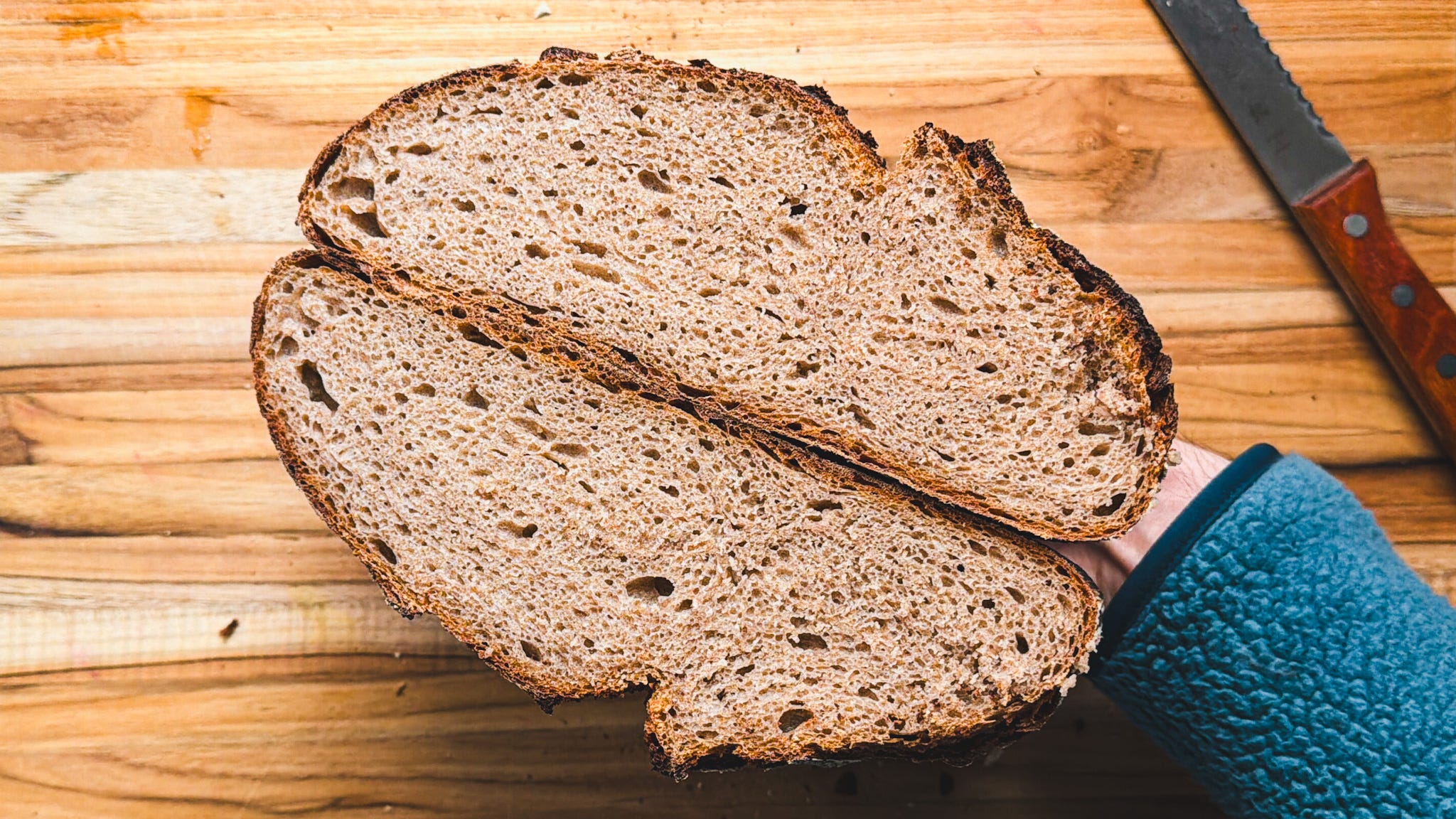
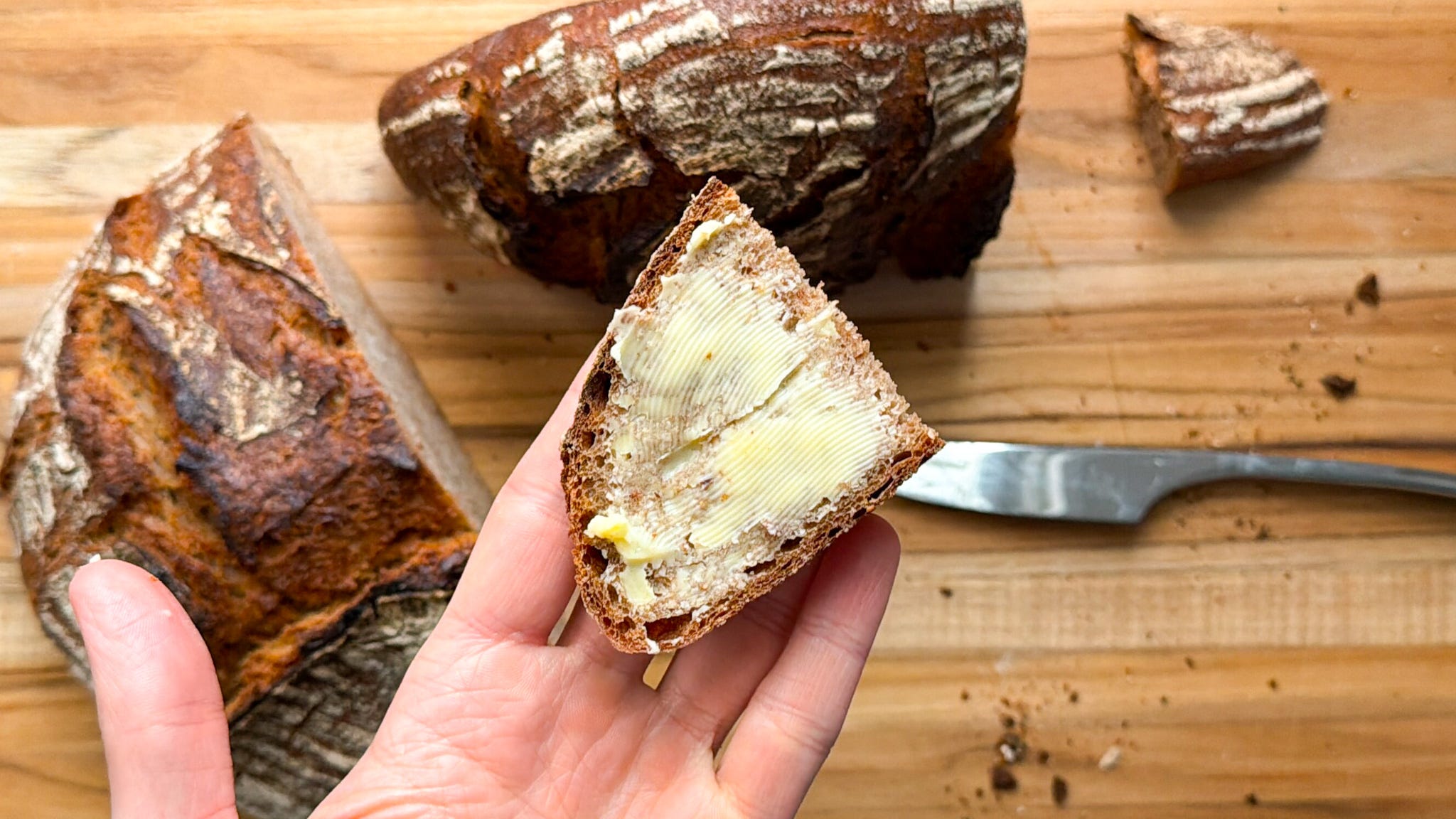
This deeply-flavored bread combines 50% dark rye flour and 50% wheat bread flour in an easy loaf packed with the heady aroma of well-fermented rye. A roasted, crisp crust, gives way to a soft crumb that manages to be hearty without being heavy. I prefer this loaf simply spread with salty butter, maybe a slice of cheese or a piece of ham. It’s a great buddy to soups, stews, and sausages.
Recipe continues for paying subscribers.
